
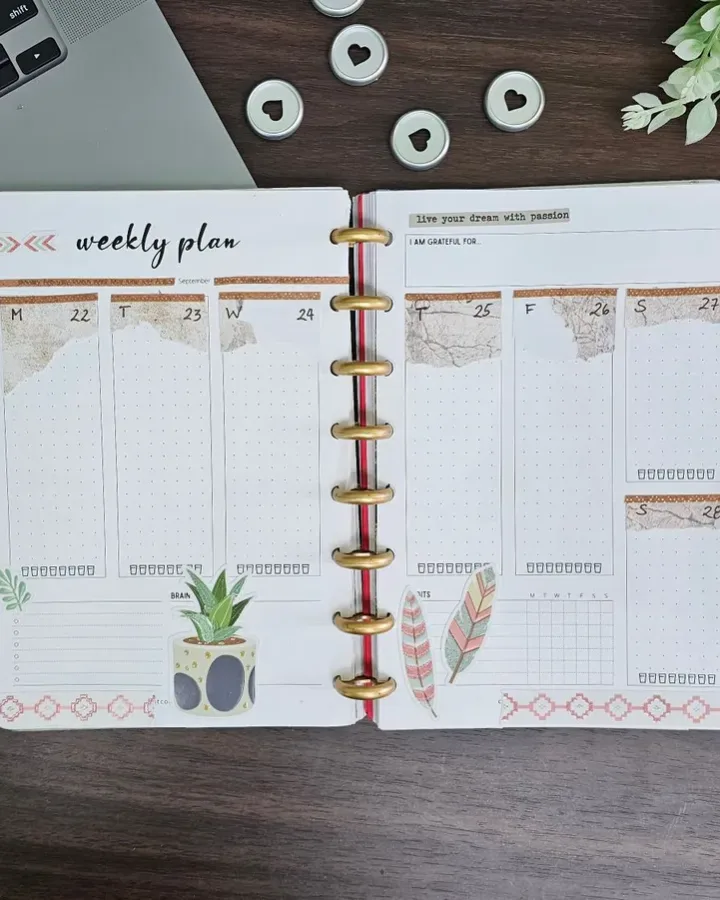
A dated planner makes a quiet promise: you will use every page, in order, on the day printed at the top. Most of us don’t. A busy week, a trip or a slow month leaves empty pages behind, and the planner starts to feel like something you have failed.
An undated planner makes no such promise. This post covers what that means in practice, and why a disc-bound one suits a life that keeps changing.
Dated or undated: what actually differs
Dated planners are convenient
The dates are already there. If your schedule is steady and you use the planner every day, that is a real advantage.
Undated planners start when you do
You can begin any week of the year. If you stop for a stretch and come back, you pick up at the next clean page. Nothing is skipped and nothing is wasted.
Changing plans costs less
A dated planner holds a fixed structure, so a change in your schedule can feel like a mess on the page. With an undated one, you write the dates yourself and the layout bends with the week.
Why disc-bound makes undated work better
An undated planner gives you freedom with the calendar. A disc-bound one gives you the same freedom with the pages. They lift out and click back in, so you can move, add or remove them in seconds.
- Add only what you use. If you rely on weekly pages and ignore the rest, keep the weekly pages. Add notes or to-do pages when a project needs them.
- Take out what you have finished. A completed month can come out, so the planner stays the size you need.
- Refill instead of replacing. When the pages run out, you add more and keep the same cover.
Size matters too. A5 is big enough to plan a week and small enough to carry every day. The Fern & Grid planners are undated, disc-bound and A5: the Three-Month Planner for one season at a time, and the Align & Thrive Annual Planner for a full year, with refills for both.
Three pages worth having
Whatever planner you use, most people end up wanting the same three layouts.
A weekly plan
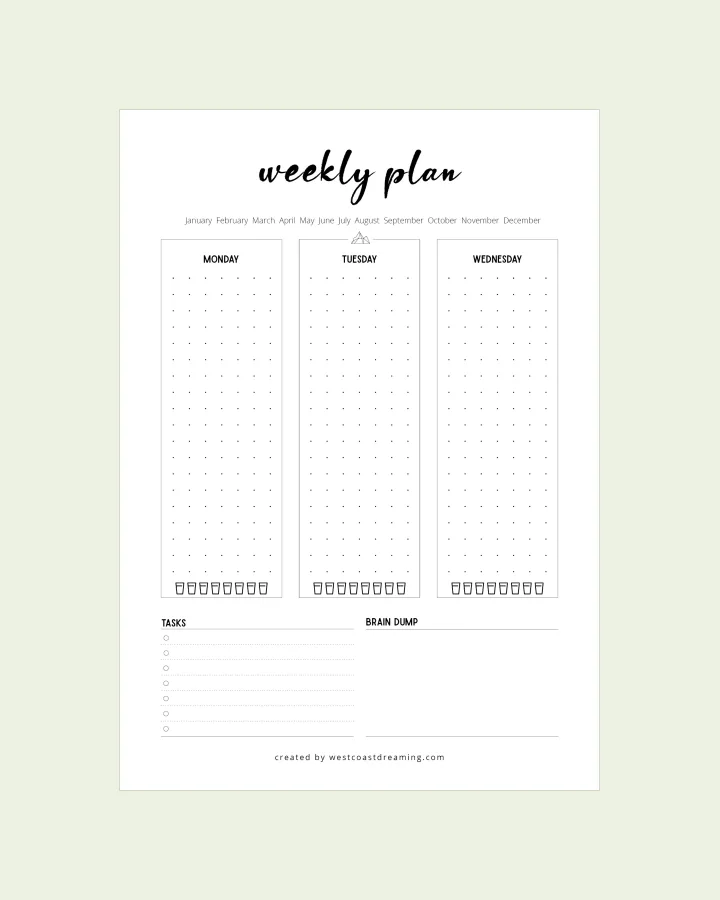
A column for each day, a task list and room for a brain dump. You fill in the dates, so you can start in any week.
A goals page
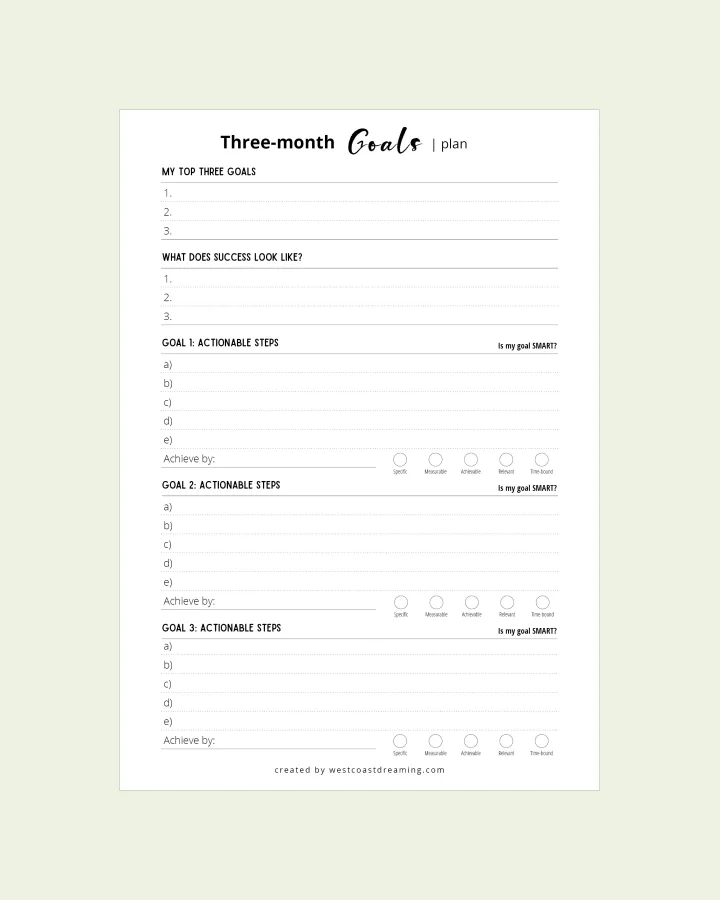
Your top three goals for the season, what success looks like and the steps for each one. Keep it near the front, where you will see it each time you open the planner.
A monthly overview
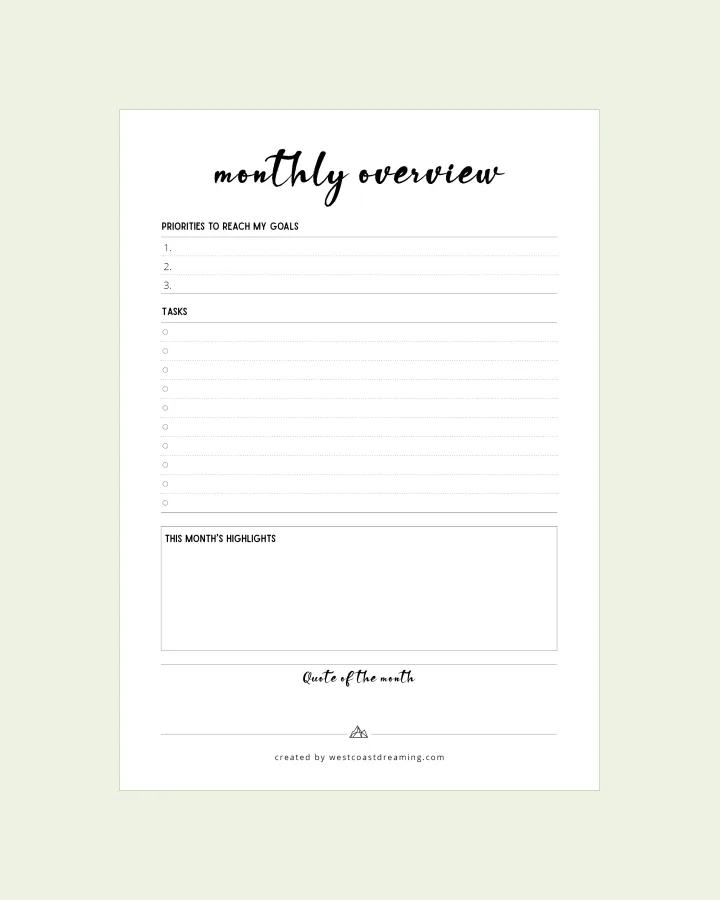
Priorities, tasks and highlights for the month on one page. Add the dates yourself, so a skipped month leaves no blank pages behind.
Who undated suits best
Undated works well if your weeks vary: a student with shifting exam dates, someone running a small business, or anyone whose projects start and stop without warning. It also suits people who like to plan in bursts and don’t want a blank page to feel like a missed day.
If you plan every day without fail and like the dates pre-printed, a dated planner is a fine choice. The right planner is the one you will open.